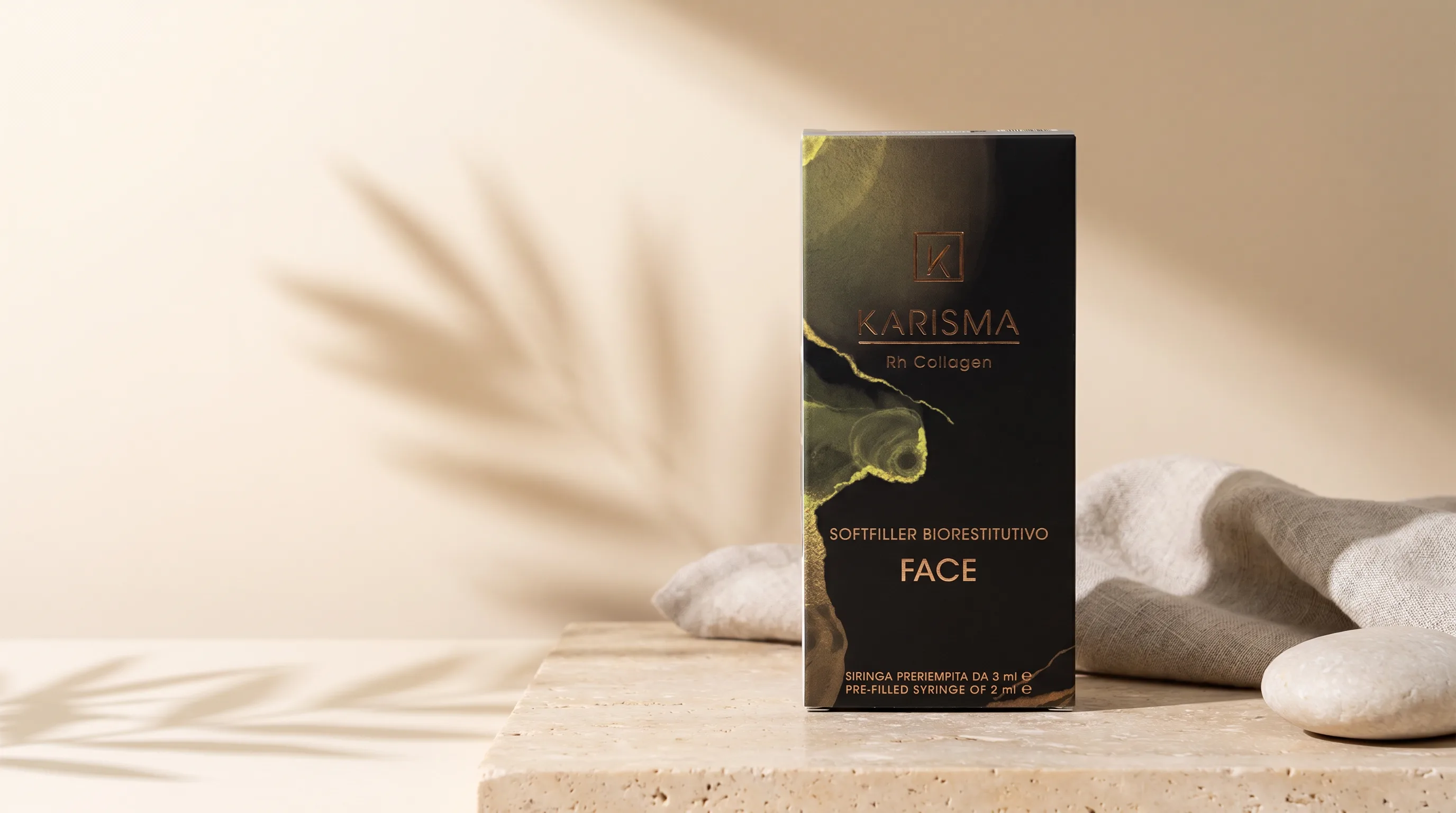
Karisma Rh Collagen · Skin rejuvenation
Early lines and acne scars, renewed with collagen your skin recognises.
Early lines, acne scars, skin that lost its bounce. Karisma gives your skin recombinant collagen as building blocks to renew itself over a short course.
Your conversation stays between you and our all-female team.
Karisma, in one paragraph
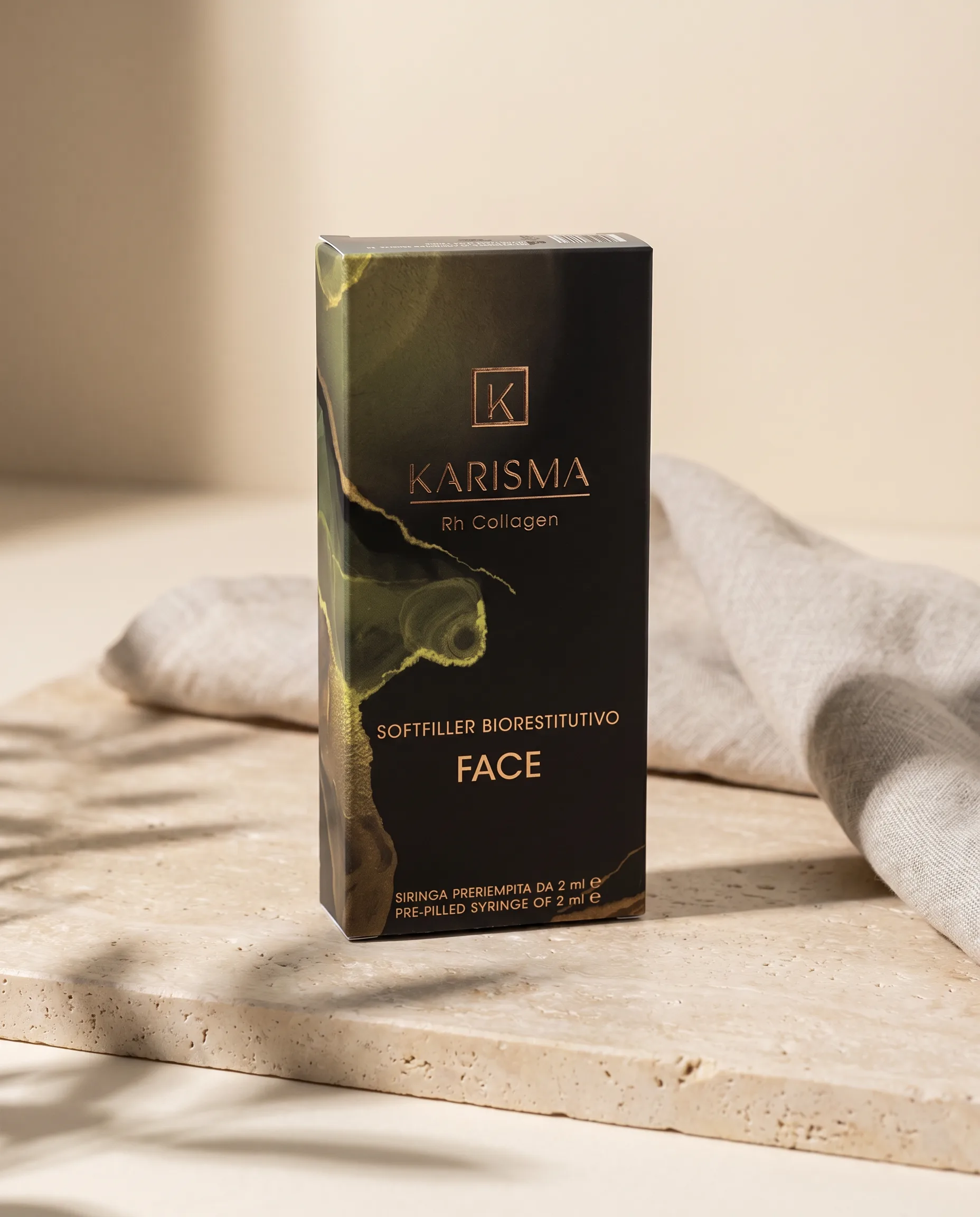
Karisma at Klinik Amisi is an injectable biostimulator combining recombinant human collagen with hyaluronic acid, designed to support skin quality and texture, often considered for early prevention and acne scar improvement. A session takes 30 to 45 minutes including numbing, with a typical course of 3 sessions spaced 3 to 4 weeks apart and periodic maintenance. Downtime is usually mild, with small bumps, redness or pinpoint marks that settle within 24 to 48 hours.
You're not alone
Skin slows down early. Long before it shows its age.
Collagen production starts to taper in your mid-twenties, quietly, years before the first lines settle in. Most women notice it the same way: skin that looks a little flatter by evening, texture that used to bounce back, scars that stopped fading.
Your skin still knows how to rebuild. Sometimes it just needs the raw material to start.

Does this sound like you?
Karisma is made for these exact concerns.
Three effects, one session
Formulated by Taumedika, Italy, using recombinant human collagen produced through NEOSILK biotechnology, with no animal source.
Regenerate
Recombinant human collagen acts as a precursor, signalling your fibroblasts to produce fresh collagen of their own.
Refine
A biorestorative soft-filler base helps restore structure and soft contour for firmer, more refined skin.
Plump
High-molecular-weight hyaluronic acid holds water in the skin for a hydrated, plumper look from day one.
How it works
A short session. Your skin rebuilds the rest.
After topical numbing, our doctor places Karisma into the upper layers of the skin in small, controlled points. The recombinant collagen gives fibroblasts a precursor to work with, while hyaluronic acid hydrates, so collagen and skin quality keep building in the weeks after each session.
What recovery really looks like
Your week after treatment.
Small bumps at the injection points are expected. Skip heavy makeup for the rest of the day.
Bumps soften and redness fades. Avoid strenuous exercise, saunas and very hot showers for 24 hours.
Skip strong actives, exfoliants and facial massage for 48 hours. Daily SPF 50+ from day one.
Collagen builds gradually, and firmness, texture and glow improve over your course.
A typical course is around 3 sessions spaced 3 to 4 weeks apart, and your doctor plans yours with you at consultation. No fixed packages, no pressure.
Doctor-led, female-led care
Advanced collagen care. In careful hands.
- Every doctor, nurse and front-desk team member is a woman.
- Private consultation rooms. Your visit and details stay discreet.
- A doctor examines and screens you before any treatment is planned.
- Four branches across the Klang Valley: Bangi, Putrajaya, Shah Alam, KL.
Questions, answered plainly
What women ask us most.
What is Karisma?
How is the collagen sourced?
Is this a filler?
Is the treatment painful?
How quickly will I see a difference?
How long do results last?
Not sure what your skin needs?
Tell us what you've been noticing, in Malay or English. Our team will let you know whether Karisma, a different treatment, or simply a consultation is the right first step.
WhatsApp us — it stays private