Plenhyage XL · Skin regeneration
Tired, dull, scarred skin, signalled to repair itself.
Fine lines, dull skin, scars that stayed. Plenhyage XL signals your skin to repair itself over a short course.
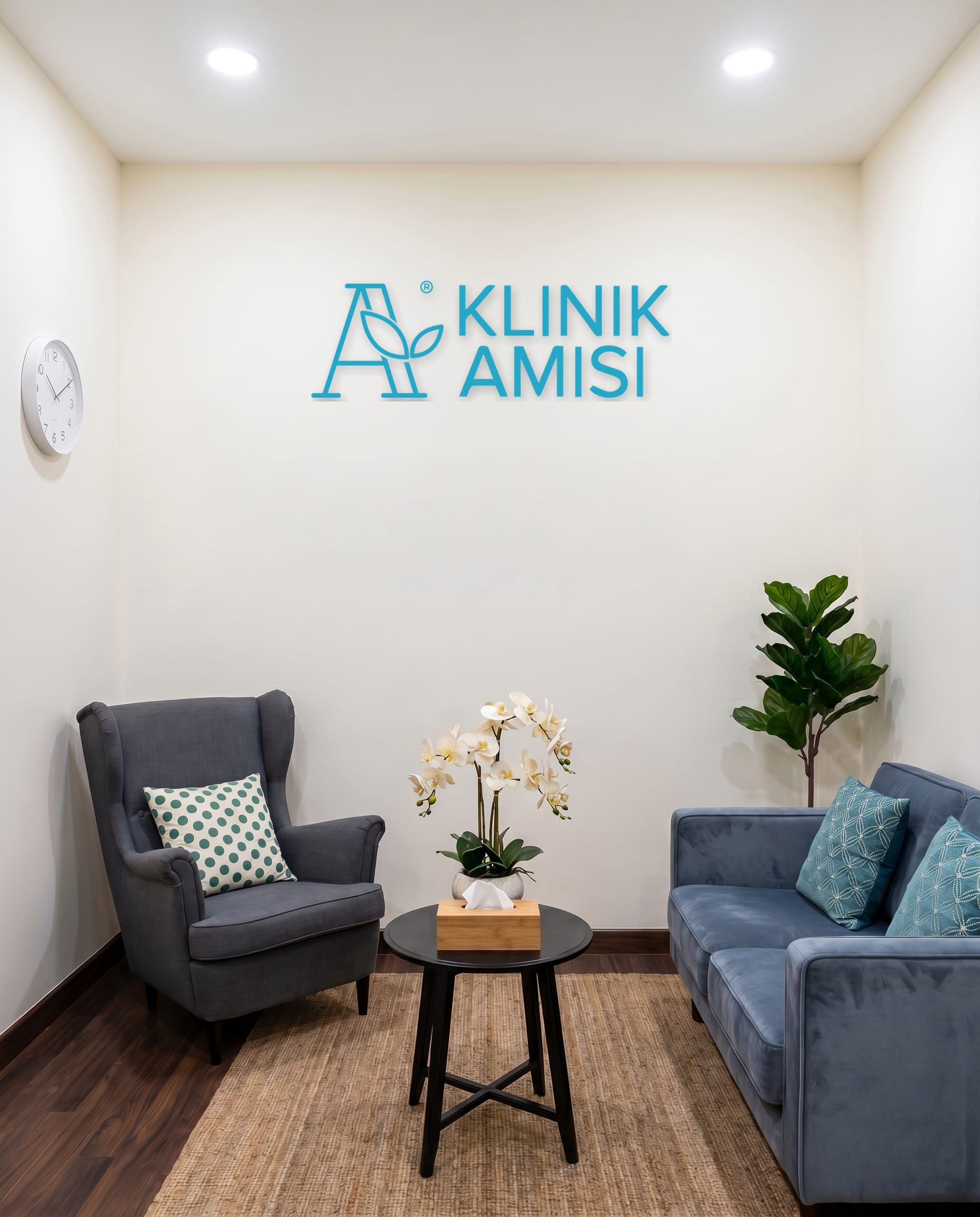
Your conversation stays between you and our all-female team.
Plenhyage, in one paragraph
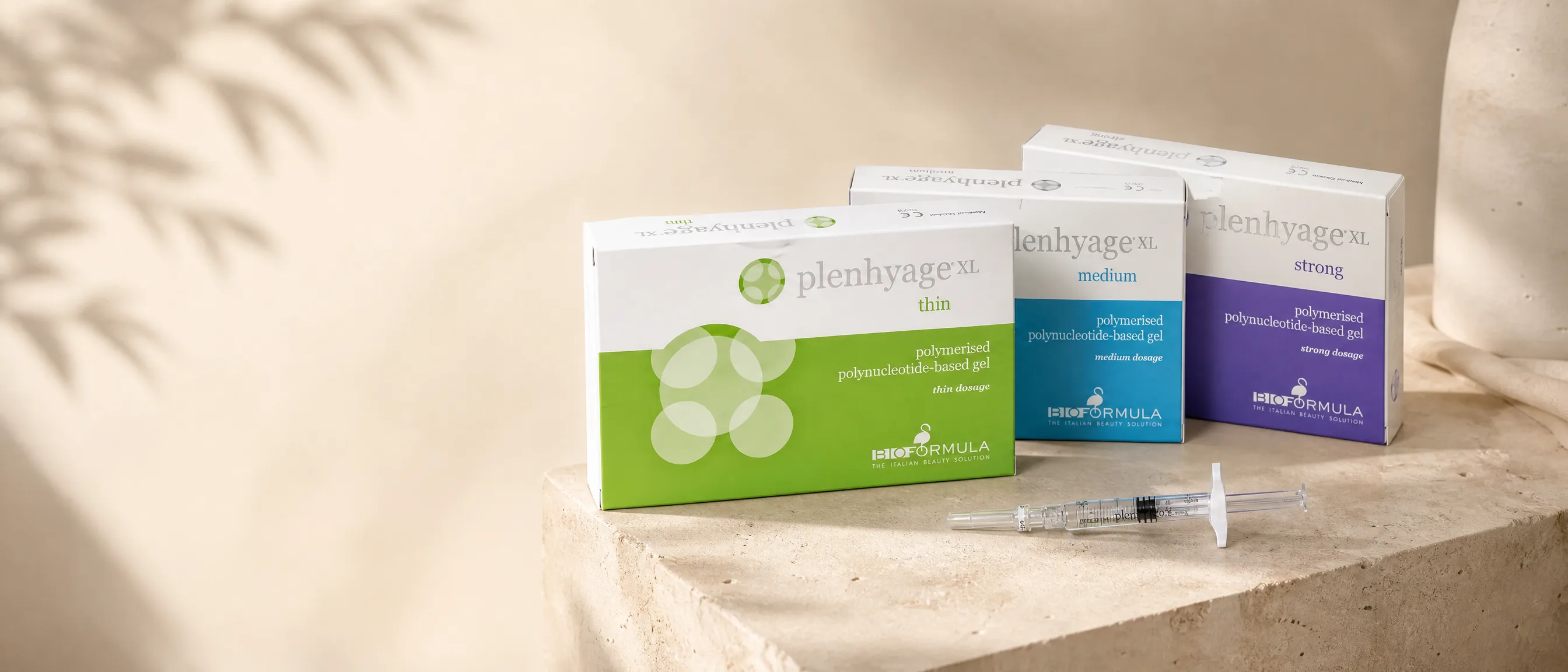
Plenhyage at Klinik Amisi is an Italian polynucleotide (PDRN) injectable regenerative biostimulator, designed to support the skin's own repair and renewal over a structured course. A session takes 30 to 45 minutes including numbing, with a typical course of 3 to 4 sessions spaced 3 to 4 weeks apart and periodic maintenance. Downtime is usually mild, with small bumps, redness or pinpoint marks that settle within 24 to 48 hours.
You're not alone
Skin gets tired. That doesn't mean it's done.
Stress, sun, hormones and time all slow the skin's own repair. Most women notice it the same way, with skin that looks dull by afternoon, fine lines that used to disappear overnight, texture and scars that stopped fading.
Your skin still knows how to repair itself. Sometimes it just needs the signal to start.
Does this sound like you?
Plenhyage is made for these exact concerns.
Three effects, one session
Formulated by Bioformula, Italy, using salmon-DNA polynucleotides for intelligent skin regeneration.
Regenerate
Polynucleotides signal your fibroblasts to rebuild collagen and elastin, for regeneration, not just rejuvenation.
Firm
Restores tissue elasticity for firmer, more toned skin over your course.
Hydrate
Deep hydration for a radiant, plumper appearance that builds week by week.
How it works
A short session. Your skin does the rest.
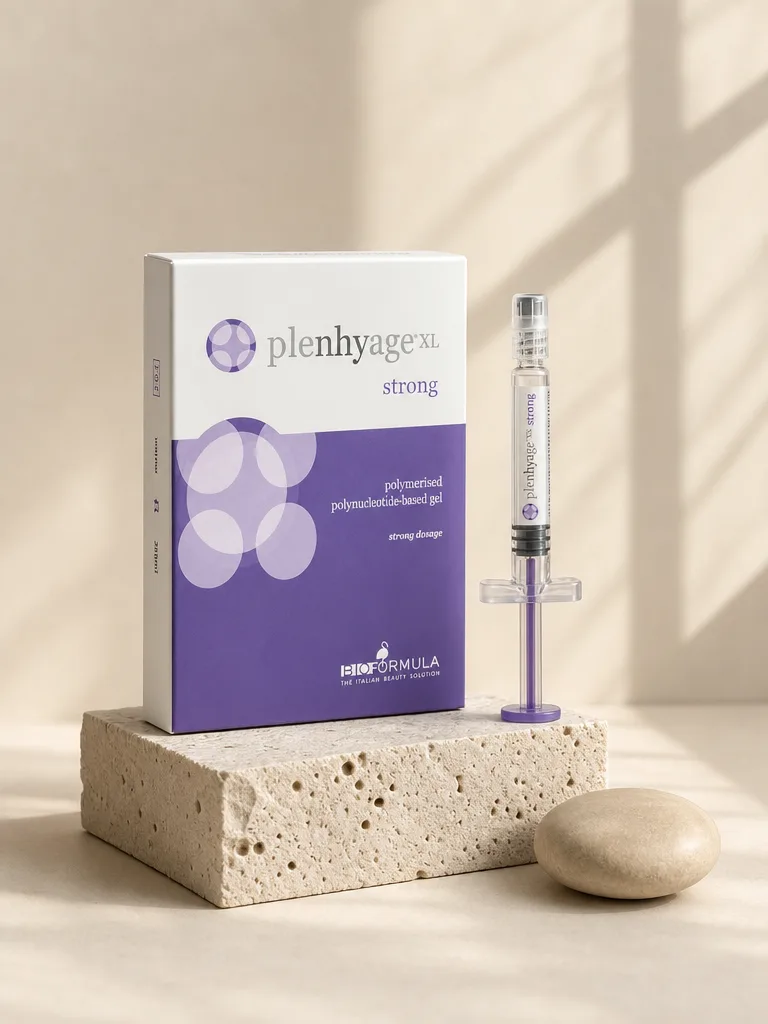
After topical numbing, our doctor places Plenhyage into the upper layers of the skin in small, controlled steps. The polynucleotides create the ideal environment for fibroblast growth, so collagen, elastin and hydration keep building in the weeks after each session.
What recovery really looks like
Your week after treatment.
Small bumps at the injection points are expected. Skip heavy makeup for the rest of the day.
Bumps soften and redness fades. Avoid strenuous exercise, saunas and very hot showers for 24 hours.
Skip strong actives, exfoliants and facial massage for 48 hours. Daily SPF 50+ from day one.
Collagen and elastin build gradually, so texture, firmness and glow improve over your course.
A typical course is 3 to 4 sessions spaced 3 to 4 weeks apart. Your doctor plans yours with you at consultation. No fixed packages, no pressure.
Doctor-led, female-led care
Regenerative treatment. In careful hands.
- Every doctor, nurse and front-desk team member is a woman.
- A doctor examines your skin and history, including any fish or salmon allergy, before anything is planned.
- Private consultation rooms. Your visit and details stay discreet.
- Four branches across the Klang Valley: Bangi, Putrajaya, Shah Alam, KL.
Questions, answered plainly
What women ask us most.
What is Plenhyage?
How is Plenhyage different from a hyaluronic acid skin booster?
Is the treatment painful?
How many sessions will I need?
How quickly will I see a difference?
How much does it cost?
Not sure what your skin needs?
Tell us what you've been noticing, in Malay or English. Our team will let you know whether Plenhyage, a different treatment, or simply a consultation is the right first step.
WhatsApp us — it stays private